Booster 19, the Super Heavy V3 rocket booster prototype intended for Starship’s 12th flight test, went through its initial testing phase at Starbase, Texas, throughout last week.
After the Booster 18 anomaly, SpaceX teams are moving ahead with Flight 12 preparations comparatively more slowly. SpaceX is taking a cautious approach towards testing.
Last year, a Starship prototype also exploded during testing at Starbase. This incident caused significant damage, and SpaceX had to reconstruct several large components at the launch site. This also caused a significant delay in the Flight 10 launch test.
SpaceX teams are relentlessly working at Starbase to meet the expected first-quarter launch test timeline. However, ensuring safety for human workers and ultra-expensive large equipment at the rocket launch site is taking a toll on the launch schedule.

Booster 19 Survives Initial Testing
Starship Flight 12 Booster 19 is a Super Heavy rocket of the V3/Block 3 generation. Booster 18 was the first V3 booster, but its outer container cracked open during the cryo-proof testing.
When SpaceX moved Booster 19 out of the Mega Bay 1, everyone thought it was going to be mounted on the launch pad. However, SpaceX moved it to the Massey Outpost on a thrust simulator stand. This was done to perform a thrust simulation of 33 Raptor engines and cryogenic pressure-proof testing.
Booster 19 successfully completed its cryo testing. SpaceX filled it with liquid oxygen at near spaceflight pressure levels. The cryogenic fluid is extremely cold, to around −196 °C [−320 °F]. This allows the compression at extreme levels and filling of maximum gas in the fuel tank of a rocket booster.
SpaceX engineers knew the previous generation Starship and Super Heavy systems so well that it took only a few cryo and static fire tests to get them flight-ready. However, with V3, SpaceX is still experimenting; therefore, it’s going to take a few more tests before we can see a Flight 12 date announcement.
Booster 19 actually went through two cryo tests. The entire rocket booster looked like it had frozen as super-chilled liquid oxygen entered it (2nd video below). The first cryo test on Booster 19 was performed on 2nd February, and the second test was completed on 4th February.
Stay tuned for future updates on Starship and SpaceX, Follow us on:
Google News | X (Twitter) | Flipboard | WhatsApp Channel | RSS (Feedly).
Related SpaceX/Starship News
-
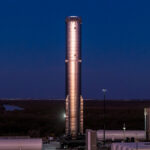
Starship Booster 19 survives the cryo test, Flight 12 updates from Starbase
-
SpaceX acquires xAI to build AI data centers in space, Tesla (TSLA) invests $2 billion in Musk’s xAI
-
SpaceX to produce ~10,000 Starships per year at Starbase, says Elon Musk, Gigabay construction update (video)

-
SpaceX pushes to stay on track for Flight 12 Starship launch schedule, watch the Christmas Parade at Starbase, Texas
-
SpaceX shares stunning videos of Flight 11 Starship and Booster 15 landings
-
Starship Flight 11: Read live updates, watch live-stream recordings of the launch

The post Starship Booster 19 survives the cryo test, Flight 12 updates from Starbase appeared first on Tesla Oracle.

No comments:
Post a Comment